
Shopping cart
Your cart empty!
Your cart empty!

Join 10k+ people to get notified about new posts, news and tips.
Do not worry we don't spam!
Jan 30, 2026 • 611 views
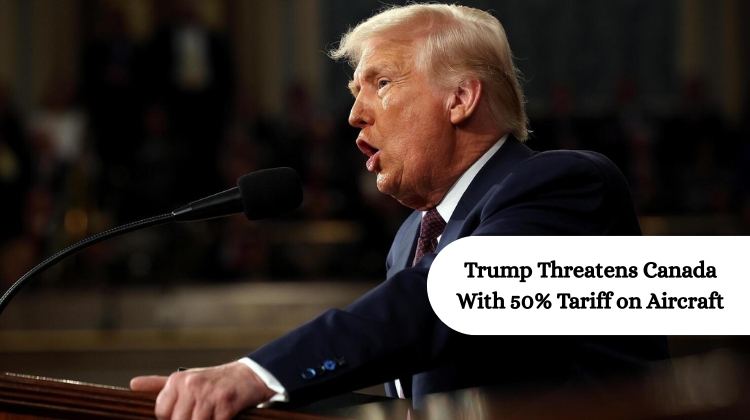
U.S. President Donald Trump has escalated trade tensions with Canada by threatening to impose a 50% tariff on Canadian aircraft imported into the United States — a dramatic move that marks a new phase in an already fractious economic relationship between the two longtime allies.
In a recent statement on social media, Trump linked the tariff threat to a dispute over aircraft certification: he claims that Canadian authorities have refused to certify certain U.S.‑made Gulfstream jets, disadvantaging American manufacturers. In response, he announced that all Canadian‑built aircraft could face a 50% tariff if the situation is not “corrected.”
Additionally, Trump said the U.S. would decertify Canadian aircraft, including business jets from Bombardier, one of Canada’s biggest aerospace firms, until the certification issue is resolved.
The Canadian aerospace industry is a significant economic sector — contributing billions to GDP and supporting hundreds of thousands of jobs. Bombardier alone operates major facilities and sells jets around the world.
Here’s why the tariff threat has broad implications:
The tariff threat also comes amid a broader political rift: Canadian leaders have publicly criticized aspects of U.S. trade policy, and Trump’s aggressive stance is seen by some analysts as part of a strategy to assert pressure on Ottawa.
However, critics argue that using regulatory certification and tariffs as leverage risks undermining established safety protocols and could set a concerning precedent in international aviation if adopted for economic rather than safety reasons.
While this dispute is bilateral, its effects may ripple further:
Other countries watching these developments may reconsider their own trade and regulatory strategies, especially if similar tariff tactics are used elsewhere.
The potential 50% tariff threat is a bold political statement and signals a willingness to escalate trade measures. But its effectiveness in compelling regulatory changes or reshaping bilateral trade dynamics is uncertain. Real changes often require longer negotiations through formal trade mechanisms — not just headline‑grabbing tariff threats.
Still, its magnitude underscores how trade policy disputes can affect not just goods like lumber or metals, but high‑technology sectors like aerospace that are deeply interconnected globally.
The U.S. threat of a 50% tariff on Canadian aircraft represents a significant escalation in the ongoing trade tensions between Washington and Ottawa. While aimed at addressing regulatory disagreements over aircraft certification, the move carries broader implications for global aviation, economic ties, and multinational supply chains. Whether this strategy yields the desired policy shifts or simply heightens friction remains to be seen — but it clearly illustrates the growing importance of trade disputes in shaping the global economic landscape.
g