
Shopping cart
Your cart empty!
Your cart empty!

Join 10k+ people to get notified about new posts, news and tips.
Do not worry we don't spam!
Jan 29, 2026 • 536 views
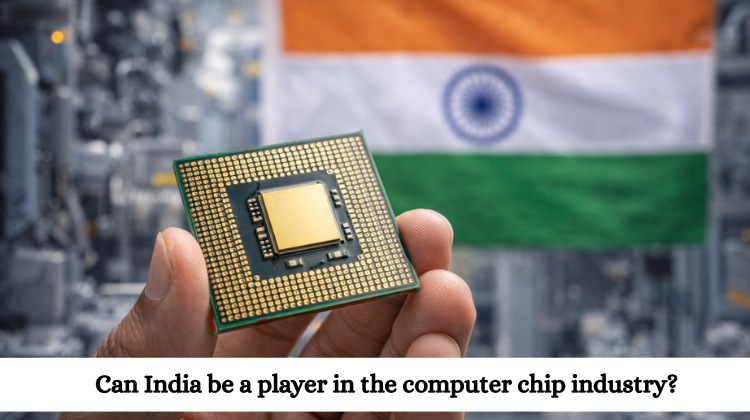
In today’s tech-driven world, computer chips—or semiconductors—form the backbone of nearly every electronic device, from smartphones and computers to cars and medical equipment. The global semiconductor industry is dominated by a handful of countries like the United States, Taiwan, South Korea, and China. But the question arises: Can India emerge as a significant player in the computer chip industry?
The semiconductor industry is critical to modern economies and national security. The COVID-19 pandemic exposed vulnerabilities in the global supply chain, sparking many countries to reconsider their reliance on a few chip manufacturers. This has created an opportunity for new players to enter the market.
India, with its robust tech ecosystem and growing manufacturing base, has shown interest in becoming part of this strategic industry. But there are challenges and opportunities that will define India’s future role.
India currently contributes a small fraction of global semiconductor manufacturing. The country primarily focuses on chip design and software services related to electronics, leveraging its strong IT talent pool. Indian startups and companies have made strides in chip design, but large-scale fabrication—known as “fabs”—remains limited.
For India to become a significant player in the semiconductor industry, a combined effort is needed from the government, private sector, and academia. This includes:
India may not immediately rival giants like Taiwan or South Korea, but it can carve out a niche in chip design, assembly, and niche manufacturing segments. With the right policies and investments, India can become an integral part of the global semiconductor ecosystem.
The semiconductor industry is highly complex and capital intensive, but India’s technological capabilities, large market, and government support create a promising foundation. While challenges exist, the growing global demand and shifting supply chains provide a unique opportunity for India to rise as a player in the computer chip industry. With vision and sustained effort, India’s chip dream can become a reality.