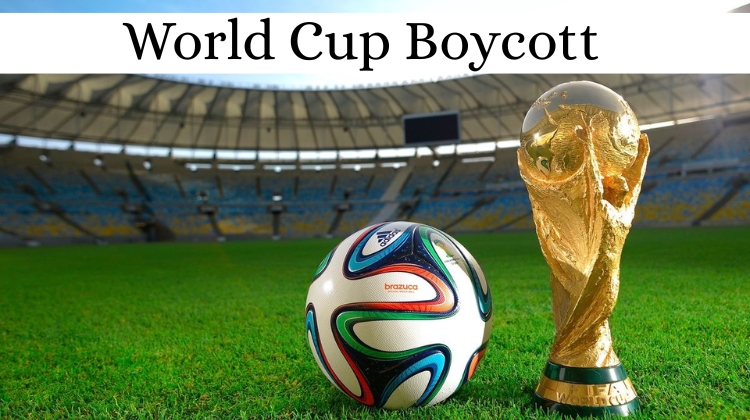
The idea of boycotting a major sporting event like the FIFA World Cup captures headlines and stirs passionate debate. As calls grow ahead of the 2026 World Cup — co‑hosted by the United States, Canada, and Mexico — it’s worth exploring why a boycott remains largely symbolic and why its real‑world impact may be limited.
Why Are People Talking About a Boycott?
Recent discussions around a World Cup boycott are driven by several factors:
- Political and Policy Concerns: Some politicians and football figures — including a vice president of the German Football Federation — have suggested that teams might refuse to participate as a response to U.S. political policies and tensions with Europe.
- Safety and Accessibility Issues: Critics point to concerns over travel bans, high ticket prices, and fears about fan safety — particularly related to U.S. immigration policy — as reasons some might stay away.
- Human Rights and Geopolitics: Past World Cups, such as Qatar 2022, saw protests and boycotts over migrant worker conditions and human rights concerns. Similar sentiments echo around 2026.
These voices underscore that sports and politics are frequently intertwined — even when organizers try to keep them separate.
The History of Boycotts and Lessons Learned
World Cup boycotts have occurred before, but rarely with impactful outcomes:
- 1966 African Boycott: African nations collectively refused to participate in qualifying for the 1966 tournament due to unfair allocation of spots. This pressure eventually helped secure guaranteed qualification spots for African teams in future World Cups — a rare success story.
- 1978 Argentina: Activists urged boycotts due to the military dictatorship in Argentina, but no national team withdrew and the tournament proceeded.
- Modern Protests: Controversies such as Qatar 2022 drew global criticism over labor rights, but did not stop the tournament or change World Cup hosting decisions.
Compared with iconic Olympic boycotts of 1980 and 1984 — which themselves achieved limited political results — World Cup boycotts have remained rare and, when attempted, mostly symbolic.
Why Boycotts Tend to Be Ineffective
Despite the visibility of the World Cup, several factors limit the effectiveness of boycott calls:
- Economic and Structural Momentum
By the time boycott talk surfaces, FIFA, sponsors, broadcasters, and host cities have already invested heavily. These financial commitments make reversing course difficult. - Fragmented Support
A boycott needs broad participation by teams, fans, and national federations to truly disrupt the tournament. Isolated calls or petitions rarely translate into mass action. - Athletes and Fans Still Want to Play and Watch
For many players, the World Cup is a once‑in‑a‑career moment. Fans likewise remain deeply attached to the sport, making widespread boycotts unlikely. - Symbolism vs. Policy Change
Even when protests raise awareness, they don’t always lead to concrete policy changes. Visibility may stir debate, but translating public pressure into political change — especially on global stages — is much harder without coordinated diplomatic action.
Is There a Middle Ground?
Some experts and commentators argue that dialogue and engagement with FIFA and host nations might be more effective than outright withdrawal. Strategic advocacy, humanitarian campaigns, and coordinated pressure from influential federations can sometimes yield more nuanced results than a boycott alone.
Conclusion: Symbolism With Limits
Boycotts — whether of a World Cup or other global event — can send a powerful symbolic message. They raise awareness, spotlight inequalities, and provoke conversation. But on their own, they are unlikely to force meaningful institutional change or halt a major tournament. The global footprint of football, the financial momentum behind the World Cup, and the deep passion of fans and players mean that symbolism often outpaces practical impact.
For those seeking change, a combined approach of advocacy, diplomacy, and engagement — rather than a simple boycott — may stand a better chance of making a lasting difference.